Present Tense
The present tense tells us about the events or acts that happen at present or day-to day lives. Examples of Present Tense are:
- She hits her singing record again.
- Soniya has participated in a horse-riding competition.
- He is awaiting his turn to go on water rides.
Present tense is categorized into 4 types:
a) Simple Present Tense
Simple Present Tense tells us about the acts, habits or events that happen in our day-to-day life or situations. It can be daily, weekly or periodically. In the simple present tense, we have to use the first form of the main verb along with adding “s/es”.
In other words, simple present tense are those events or actions that occur repeatedly.
Simple Present Tense is used for:
- universal truths
- day-to-day activities
- to show ownership or possession on something
- exclamatory sentences begins with “Here/There”.
- live events or activities
- quotes written by author
Rules and Examples of Simple Present Tense
| Sentence | Rules | Examples of Simple Present Tense |
|---|---|---|
| Assertive | Subject + Main Verb (1st form) + s/es + Object | i) Doctor prescribes the medications of joint pain to my grandmother. ii) My brother spills the milk on the floor. iii) He throws the dry compost in the dustbin. iv) Riya saves a child from drowning in the water. v) The bird flies in the sky after drinking water from the pond. |
| Interrogative | Do (plural)/Does (singular) + Subject + Main Verb (1st form) + Object | i) Does he reach the venue on time? ii) Do they finish the task on time? iii) Does Kiran pick the fresh tea leaves from the garden? iv) Do volunteers spread awareness to save the tree through the posters? v) Does the baby hold a balloon in his hand? |
b) Present Continuous Tense
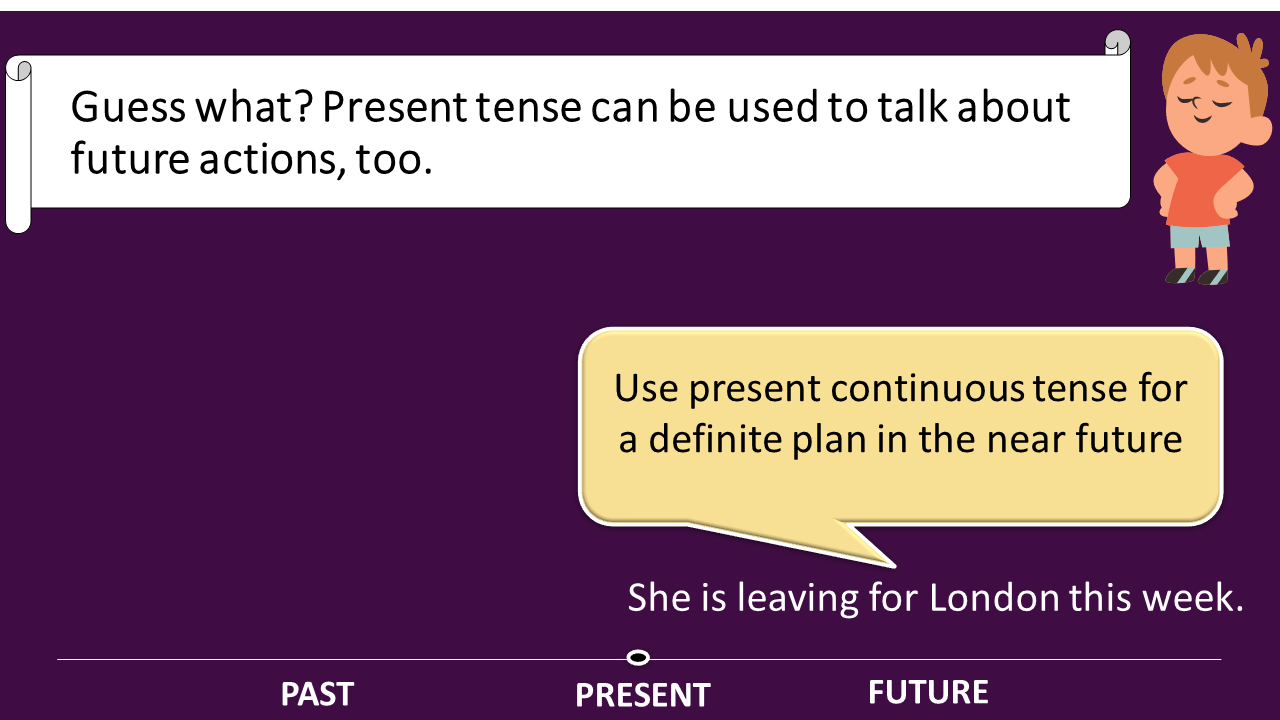
Present continuous tense states the actions happening at the current time right now. In the present continuous tense, we have to use the helping verb (is/am/are), the main verb first form and add “ing” in the main verb.
In the present continuous tense, the helping verb usage totally depends on whether the subject is singular or plural. If the subject is singular, then we have to use a helping verb (is/am). But if the subject is plural, then we have to use a helping verb (are).
Present continuous tense are also known as Present Progressive Tense.
Rules and Examples of Present Continuous Tense
| Sentence | Rules | Examples of Present Continuous Tense |
|---|---|---|
| Assertive | Subject + Helping Verb (is/am/are) + Main Verb (1st form) + ing + Object | i) Preesha is taking the medicines. ii) I am washing the clothes in my new automatic washing machine. iii) We are planning an itinerary for a vacation in Greece. iv) He is competing in the Science Olympiad. v) Shopkeepers are selling the veggies at different prices. |
| Interrogative | Am/Is/Are + Subject + Main Verb (1st form) + ing + Object | i) Am I writing the essay on “health and sanitation”? ii) Is she singing at the concert? iii) Are you driving in foggy weather? iv) Is she pursuing an interior design course? v) Are you facing any trouble in fixing the light? |
c) Present Perfect Tense
In English, the present perfect tense is used for those activities that completed just now, but the effect of those activities is also in the present.
Rules and Examples of Present Perfect Tense
| Sentence | Rules | Examples of Present Perfect Tense |
|---|---|---|
| Assertive | Subject + Helping Verb (has/have) + Main Verb (3rd form) + Object | i) Rishabh has instructed his friend on the process of writing a quality research paper. ii) The police have instigated the thief about the robbery. iii) The painter has varnished my new furniture. iv) I have observed a new constellation in the sky. v) My principal has implemented a waste management system in the school. |
| Interrogative | Has (singular)/Have (plural) + Subject + Main Verb (3rd form) + Object | i) Has she reached her destination? ii) Have they solved the concern of the addition of novels to the curriculum? iii) Has she created a blueprint for the final assessment? iv) Have you tasted a variety of coffee in the coffee museum? 5 v) Have you leased a car for a vacation? |
d) Present Perfect Continuous Tense
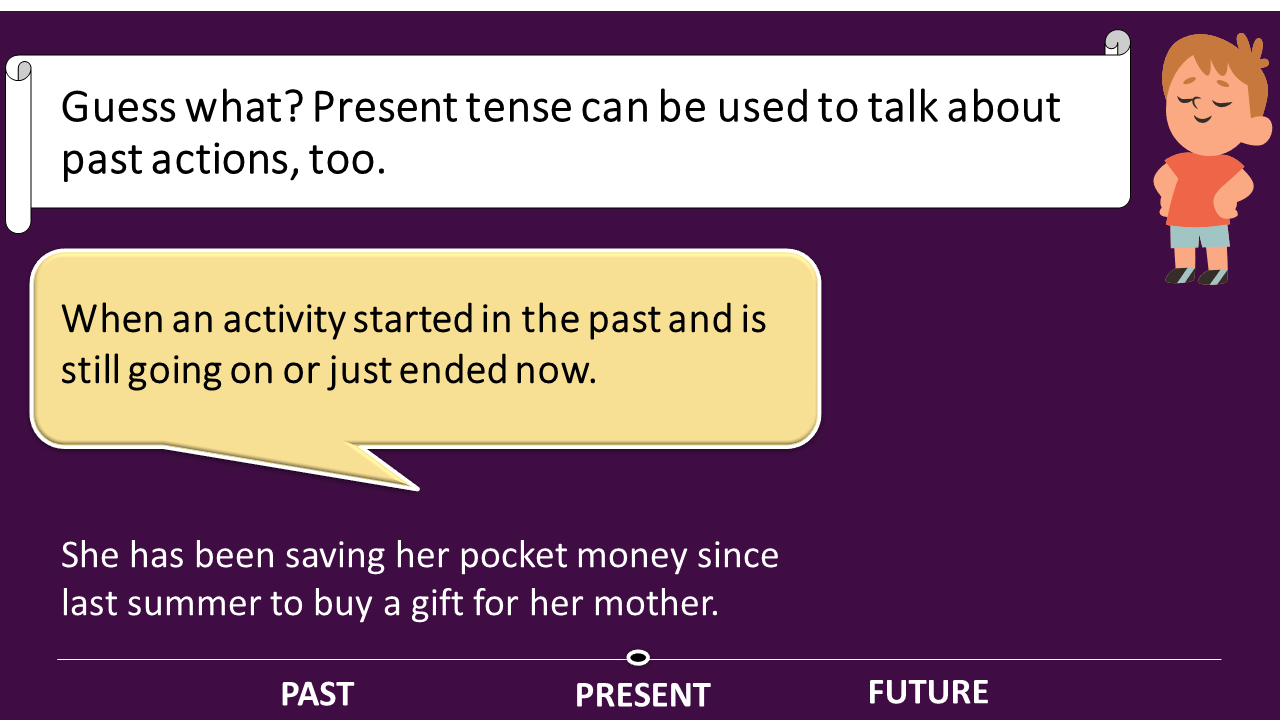
The present perfect continuous tense describes the activities that began in the past, but it is in continuation till now.
Rules and Examples of Present Perfect Continuous Tense
| Sentence | Rules | Examples of Present Perfect Continuous Tense |
|---|---|---|
| Assertive | Subject + Helping Verb (has/have) + been + Main Verb (1st form) + ing + Object + for/since + time/duration/period | i) Riya has been writing the assignment since morning. ii) The teacher has been teaching the students since dawn. iii) His brother has been practicing the music for two hours. iv) She has been living in this house since 1980. v) I have been editing this article for two days. |
| Interrogative | Has (singular)/ Have (plural) + Subject + been + Main Verb (1st form) + ing + Object + for/since + time/duration/period | i) Has Shreya been driving the car for four hours? ii) Have you been revising the lesson since 5 O’clock? iii) Have you been playing badminton since morning? iv) Has she been implementing the software for several hours? v) Have you been maintaining the files of all appointments since 1999? |
Practice Exercise
| Fill in the blanks with the correct form of the Present tense given in brackets: i) The author has _______________ health-related article mistakenly in the fashion section of the magazine. | (publishes/published) |
| ii) Hop on the train, it is __________. | (leaves/leaving) |
| iii) Riya ___________ a lot, but today she isn’t ________________. | (draws, drawing/has been drawing, draws) |
| iv) He has ___________ the project for two hours. | (finalizes/been finalizing) |
ENGLISH-RELATED CONCEPTS: