What are Financial Statements?
Financial statements provide a summary of the past performance of the organization, and external and internal users utilize them with an economic interest in the organization. Financial information derived from analysis of financial statements provides the basis for decision-making.
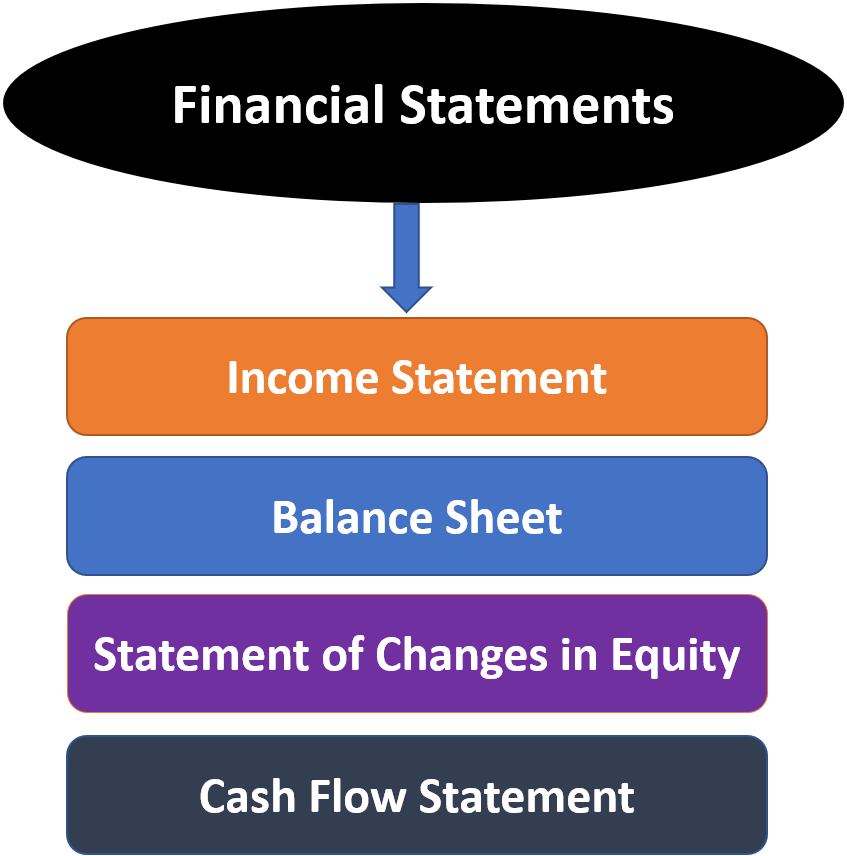
Types of Financial Statements
Income Statement
It records the revenues, expenses, and gains/losses that have an impact on the profitability of the organization and prepared over a period of time, on a monthly, quarterly, and yearly basis. Example, ‘Profit and Loss statement for the period ending….’ to analyse the financials with an aim to control the cost and increase revenue. This further helps to keep the activities of different cost and revenue centres in check and control. Items on the income statement are recorded on an accrual basis of accounting, meaning revenue is recorded when earned and expense is recorded when incurred, regardless of when the cash is received or paid.
Balance sheet
It reports the assets and liabilities and shareholders’ equity at a given point of time. It is always prepared ‘as of….’ indicating the financial position at a particular point of time, example, a month, quarter or year.
Accounting Equation on which the Balance Sheet is based:
Assets = Liabilities + Capital
Assets = Cash, Accounts receivable, Inventory, Prepaid Expenses, Property, Plant and Equipment (PPE)
Liabilities = Accounts Payable, Dividend payable, Debt payable, Salaries outstanding
Capital = Shareholder’s equity, Retained earnings, Profit/loss from P&L account
Statement of Changes in Equity
It reports the changes to stockholder’s equity period over period. It shows common stock, additional paid-in capital, retained earnings and treasury stock.
Statement of Cash Flows
This statement depicts the cash position of the companies, sources of cash and their deployment over a period of time. Its prepared on the concept of Cash Basis of Accounting. It shows the change in cash over a period of time, and it’s broken into three categories:
Operating cash flow: This statement shows the cash source and deployment on Operations of the organization
Investing Cash flow: This statement shows the cash outflows on long-term investment of the cash like purchase of PPE and cash inflows from the sale of these items
Financing Cash flow: This statement outlines the cash inflows from borrowings or the sale of stock and outflows on repayment of debt and dividends and purchasing treasury stock.
More Lesson Plans related to Commerce, Business Studies and Economics
More English Related Articles: